A ceiling stain rarely means the leak started right above it. Water travels. It can move along decking, rafters, insulation, and vent penetrations before it finally shows up in a hallway, bedroom, or attic corner. That is why residential roof leak repair needs more than a quick patch. The real job is finding the true entry point, correcting the weakness, and making sure the problem does not come back after the next hard rain or Minnesota freeze-thaw cycle.
For homeowners, that difference matters. A small leak can turn into damaged insulation, mold growth, stained drywall, rotted wood, and a much larger repair bill if it is handled halfway. The right repair protects more than shingles. It protects the structure of the home, the finish work inside, and your confidence that the roof will hold when the weather turns.
What causes most residential roof leaks?
Most roof leaks are not random. They usually start where the roofing system changes direction, where something penetrates the roof, or where age and weather have worn down materials over time. Flashing around chimneys, vents, skylights, and walls is a common failure point. So are pipe boots, exposed nail heads, cracked sealant, missing shingles, storm-lifted tabs, and worn valleys where water naturally concentrates.
Age also plays a role, but age alone does not tell the whole story. A newer roof can leak if it was installed poorly, if flashing details were rushed, or if storm damage broke the seal of the system. An older roof may still perform well if it was built with quality materials and maintained properly. That is why a visual symptom inside the home should never be treated as proof of a single obvious cause.
In colder climates, ice dams add another layer of risk. When melting snow refreezes at the roof edge, water can back up under shingles and into the home. In that case, the leak is not just about the roof covering itself. Ventilation, insulation, attic heat loss, and drainage all come into play.
Why fast action matters
A roof leak almost never stays the same size for long. Even if the drip looks minor, the trapped moisture may already be spreading through insulation and wood components you cannot see. Wet insulation loses effectiveness, which can drive up energy costs. Repeated moisture exposure can weaken roof decking and create conditions for mold, especially in attic spaces.
There is also the issue of timing. A leak that appears during one storm can worsen quickly in the next one, particularly if wind lifts nearby shingles or water finds a new route through softened materials. Waiting for a more convenient season often means paying for interior repairs that could have been avoided.
That does not mean every leak demands a full roof replacement. It means the home deserves a prompt, professional evaluation so the right scope can be determined before the damage spreads.
Residential roof leak repair is about diagnosis first
The strongest repair starts with the right diagnosis. A contractor should inspect the roofing materials, flashing, roof penetrations, attic conditions, and any visible signs of moisture migration. When needed, they should also look at surrounding components such as gutters, soffit, and fascia, because poor drainage or ice buildup can contribute to recurring leaks.
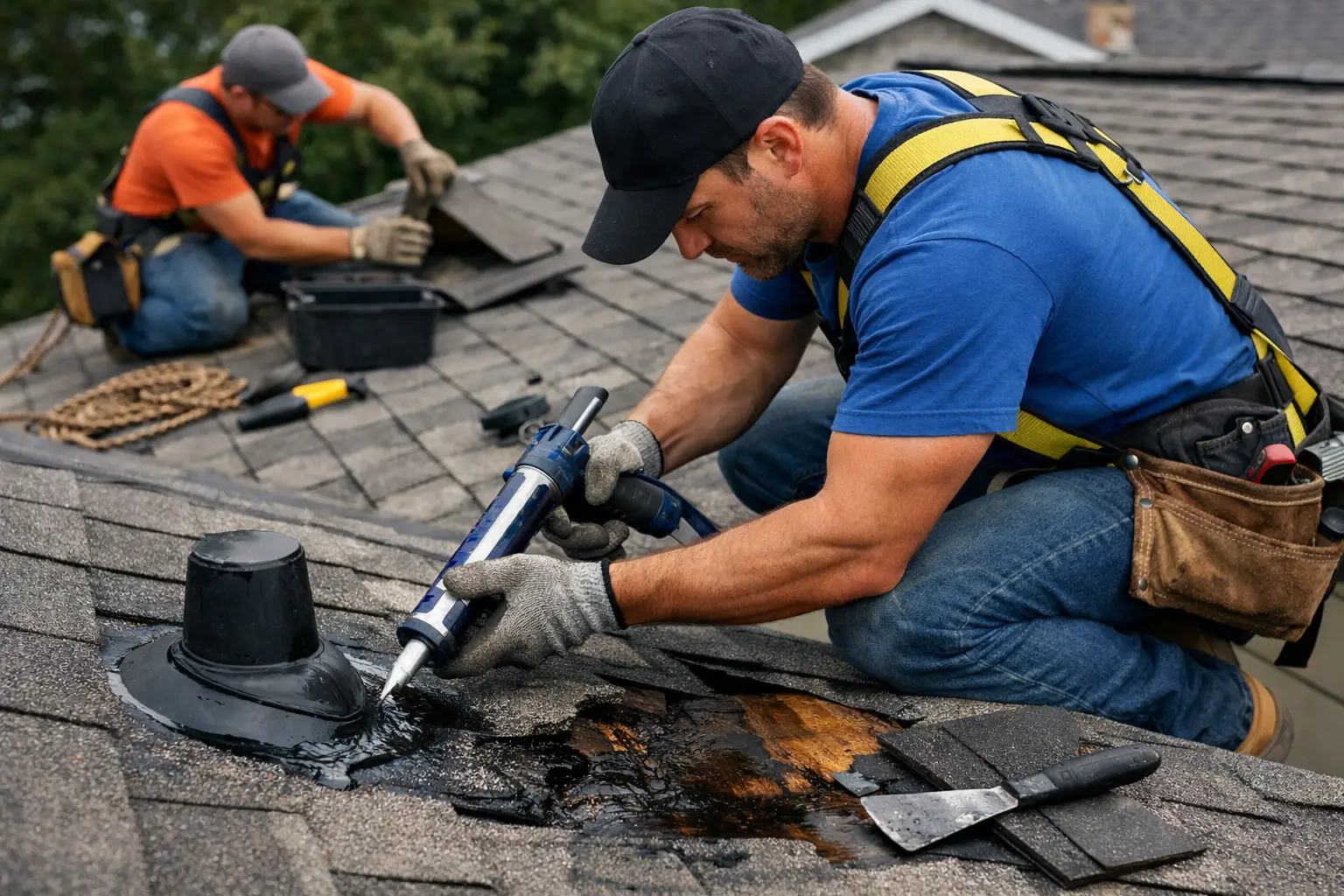
This is where homeowners often get frustrated with temporary fixes. Caulk, roof cement, or a surface patch may slow water for a short time, but if the actual failure is hidden under shingles, behind a wall flashing detail, or tied to ice dam formation, the leak is likely to return. Fast is good when water is entering the home. Guessing is not.
A dependable contractor will tell you when a focused repair makes sense and when the leak is actually a symptom of broader roof failure. That honesty saves money in the long run. Paying less for a patch that fails next season is not really paying less.
When a repair is enough and when it is not
A targeted repair often makes sense when the roof is otherwise in solid condition and the leak can be traced to an isolated issue. That may include replacing damaged shingles, repairing or replacing flashing, resealing a vent area properly, correcting a small section of roof decking, or addressing a problem caused by a recent storm.
A larger solution may be the better investment when leaks are showing up in multiple areas, shingles are brittle or heavily worn, flashing failures are widespread, or the roof is near the end of its service life. If water intrusion has been ongoing for a while, the repair may also involve more than roofing materials. Decking, insulation, and interior finishes may need attention too.
This is one of those situations where it depends. A good contractor should not push replacement automatically, and they should not promise that every leak can be solved with a small repair. The right recommendation comes from the condition of the whole system, not just the visible stain on the ceiling.
What homeowners can expect during the repair process
A professional roof leak repair should feel organized, not chaotic. First comes the inspection and source identification. Then the contractor explains what failed, what needs to be removed, what can be preserved, and how the repaired area will be integrated with the rest of the roof.
If storm damage is involved, documentation becomes especially important. Photos, condition notes, and a clear scope of work can help support the insurance process where applicable. Homeowners should also expect clear communication on pricing, timing, and what happens if hidden damage is found once materials are opened up.
The repair itself may involve removing shingles around the affected area, replacing compromised underlayment or decking, installing new flashing details, and blending matching materials as closely as possible. Once completed, the area should not just look patched. It should function as part of a complete roofing system designed to shed water correctly.
The Minnesota factor
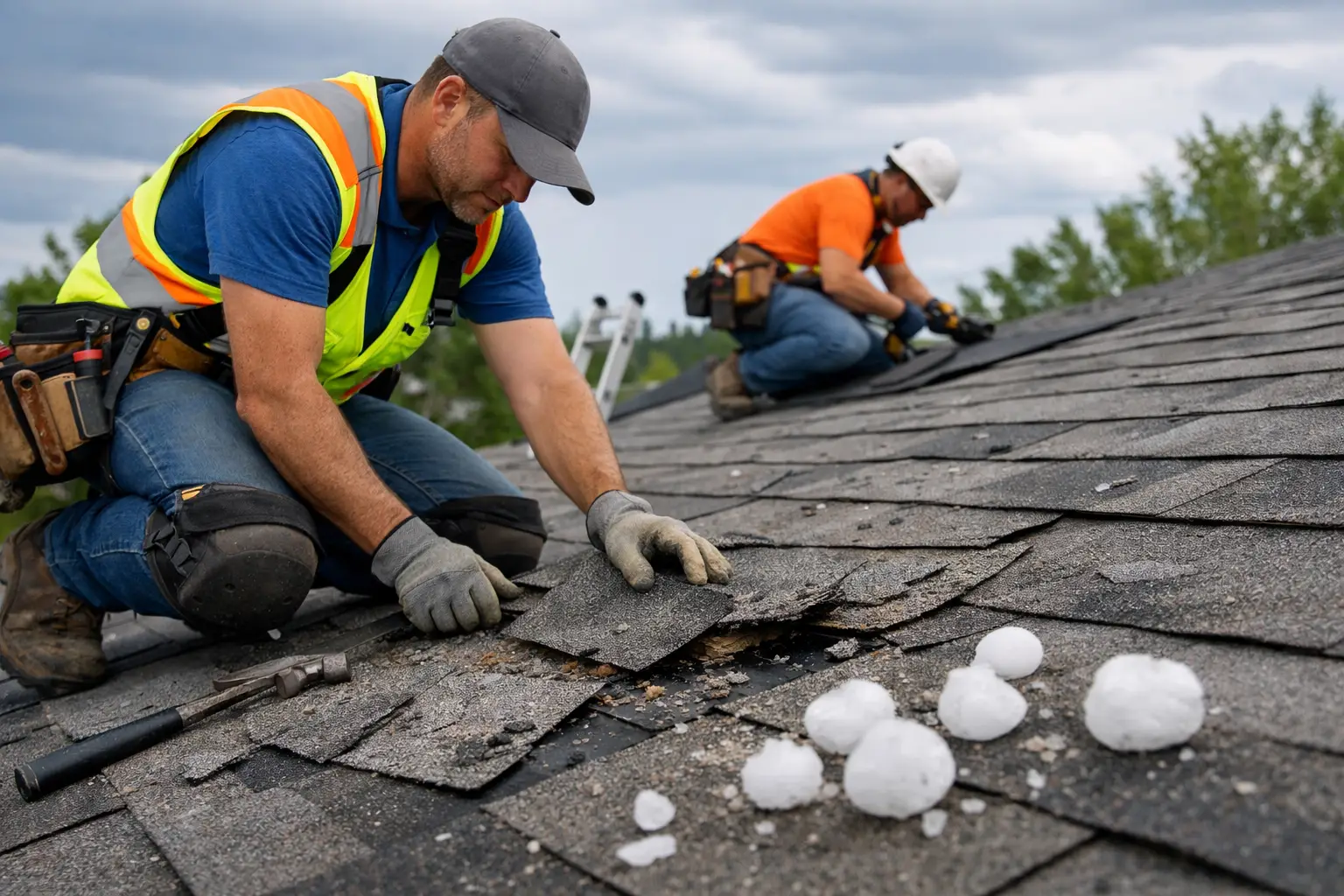
In the Twin Cities, residential roof leak repair has to account for more than rainfall. Snow loads, ice dams, wind-driven storms, hail, and repeated freeze-thaw cycles put added stress on shingles and flashing. A repair that ignores those conditions may look fine on a mild day and fail when winter pressure builds.
That is why local experience matters. Roof details that perform well in one climate do not always hold up the same way here. Contractors who regularly work on Minnesota homes understand how attic ventilation, insulation, ice barrier placement, drainage, and weather exposure affect leak patterns and repair durability.
For many homeowners, the leak they see in January actually began with a weakness that formed months earlier. The cold weather simply exposed it.
Choosing a contractor for residential roof leak repair
Not all repairs are equal. Homeowners should look for a contractor with proven roofing expertise, strong workmanship standards, and a process that does not leave them guessing. That includes a thorough inspection, a clear explanation of findings, quality materials, and confidence in the finished work.
It also helps to work with a company that understands the full exterior system. A roof leak can be tied to gutter performance, ice dam issues, fascia deterioration, or storm-related damage that extends beyond the shingles themselves. A contractor who sees the whole picture is better positioned to solve the cause, not just the symptom.
For homeowners who value long-term protection, warranty support and manufacturer-backed credibility are worth paying attention to. They are signs that the company is serious about craftsmanship and accountability. Roofs R Us approaches leak repair that same way – with careful assessment, premium materials, and a commitment to protecting the home from the first inspection through the final repair.
What to do if your roof is leaking now
If water is actively entering the home, protect the interior first. Move valuables, place a container under the drip if possible, and limit contact with wet ceilings or electrical fixtures. If the ceiling is sagging, treat it as a safety issue. Then call for a professional inspection as soon as possible.
Avoid climbing onto the roof yourself, especially in wet, icy, or storm conditions. The risk is high, and most leak sources are not as obvious as they appear from the ground. What looks like a simple missing shingle can turn out to be flashing failure or hidden water damage underneath.
A roof leak puts homeowners in a stressful spot because it feels urgent and uncertain at the same time. The best next step is not a guess or a temporary smear of sealant. It is a clear, professional evaluation that finds the source, fixes it correctly, and helps your home stay protected through the next storm.