Table of Contents
ToggleA roof can look perfectly fine from the street and still be failing from the inside out. In Minnesota, that often starts in the attic, where trapped heat and moisture quietly shorten roof life, feed mold growth, and contribute to ice dam problems. That is why hiring an attic ventilation roof contractor is not just about adding vents. It is about protecting the entire roofing system.
Too many ventilation discussions get reduced to a single fix, like installing a ridge vent or swapping out a few roof vents. Real attic ventilation is more connected than that. Your roof, attic insulation, soffit intake, exhaust venting, and even bathroom fan termination all affect how well the system performs. If one part is off, the rest of the roof can pay for it.
What an attic ventilation roof contractor actually does
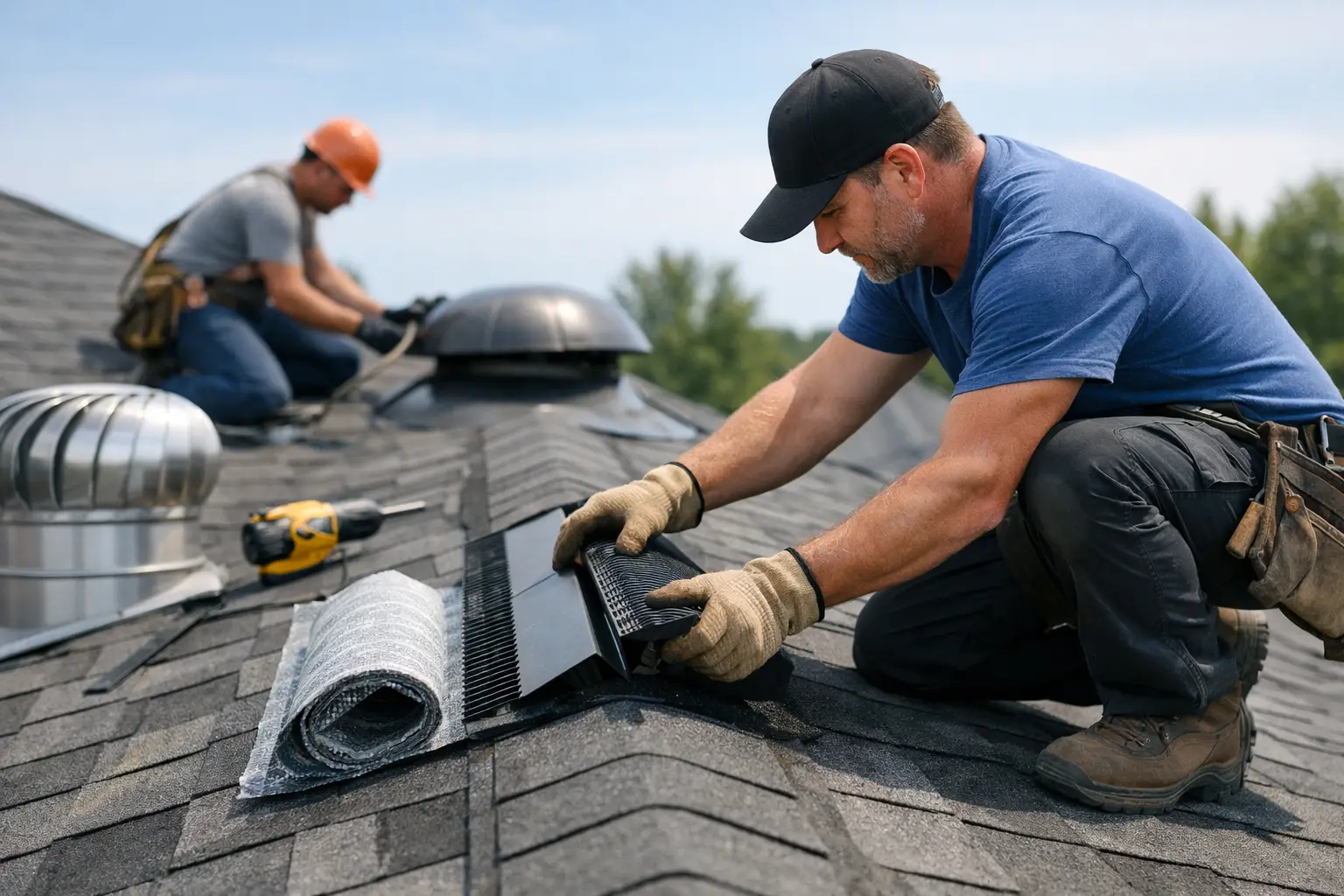
A qualified contractor should look beyond the shingles. Ventilation is a system, not an accessory, and the job starts with identifying how air currently moves through the attic. That means checking intake at the soffits, exhaust near the ridge, insulation levels, blocked airflow paths, signs of condensation, and evidence of heat buildup.
A good inspection also looks for the symptoms homeowners usually notice first. Those may include uneven snow melt, recurring ice dams, damp insulation, musty attic air, rusty nail heads, or shingles that seem to age too fast. Commercial properties can show similar warning signs, though the ventilation design often depends on roof type, building use, and code requirements.
The right contractor is not there to oversell vent products. They should explain what is happening, why it is happening, and whether the issue is truly ventilation, insulation, roof design, or some combination of the three.
Why attic ventilation matters more than most property owners realize
When an attic cannot breathe, heat and moisture build up. In winter, warm indoor air can rise into the attic and condense on cold surfaces. Over time, that moisture can damage wood framing, reduce insulation performance, and create conditions for mold. In summer, excessive attic heat can stress roofing materials and make cooling costs harder to manage.
For Minnesota homeowners, the winter side of the equation is often the bigger concern. Poor attic ventilation does not cause every ice dam by itself, but it is often part of the problem. When roof deck temperatures vary too much, snow melts and refreezes at the eaves, which can lead to water backup under shingles. If that pattern keeps repeating, the damage can move beyond the roof and into walls, ceilings, and insulation.
This is one reason ventilation work should never be treated like a cosmetic upgrade. It affects durability, comfort, energy performance, and the long-term value of the roof investment.
Signs you may need an attic ventilation roof contractor
Some warning signs are easy to spot, while others stay hidden until a roof inspection uncovers them. If your home gets heavy icicles every winter, if the attic feels extremely hot in summer, or if you have seen moisture staining or frost in the attic, it is time to get the system evaluated.
You may also need help if your roof was replaced but the ventilation was never redesigned. That happens more often than it should. A new roof installed over an underperforming ventilation setup may still leave the home vulnerable to moisture issues and premature wear.
Older homes are especially worth checking because many were built before current ventilation expectations became standard. On the commercial side, additions, retrofits, and occupancy changes can all alter how the building handles heat and moisture.
The most common ventilation mistakes
The biggest mistake is unbalanced airflow. An attic needs intake and exhaust working together. If exhaust is added without enough intake, the system can struggle to pull air properly. If soffit vents exist but insulation blocks the airflow, the intake side is weakened even though vents appear to be present.
Another common issue is mixing vent types in ways that compete with each other. For example, combining ridge vents with certain box vents can disrupt the intended air path. More vents do not always mean better performance. The layout has to make sense for the roof structure.
There are also cases where the attic problem is not the vent itself but an air-sealing issue inside the home. Warm, moist air from bathrooms, kitchens, and living spaces can leak upward and overload the attic environment. A contractor who understands roofing as a full protection system will look for that possibility instead of blaming everything on one missing vent.
What to expect from a professional assessment
A strong contractor should start with inspection, not assumptions. That means documenting existing venting, measuring or estimating ventilation balance, and checking the attic for moisture and heat-related distress. They should also explain whether the current roof has enough intake and exhaust for its size and design.
You should expect clear recommendations, not vague advice. If ridge venting makes sense, they should say why. If soffit vents are blocked or missing, they should explain how that affects the system. If insulation or baffles are part of the solution, that should be part of the conversation too.
This is also where experience matters. Ventilation work tied to a roof replacement has to be integrated correctly with underlayment, flashing, and the rest of the roofing system. A contractor focused on long-term performance will treat attic ventilation as part of roof protection, not a small add-on.
Attic ventilation and roof replacement should work together
If your roof is already nearing the end of its service life, ventilation improvements are often best handled during replacement. It is more efficient, the system can be designed as a whole, and the contractor can address underlying decking or moisture damage at the same time.
This approach also helps protect the value of the new roof. Premium shingles and top-quality installation matter, but ventilation still plays a role in how well that roof performs over time. A roof is only as dependable as the system beneath and around it.
For some properties, a targeted ventilation upgrade is enough. For others, especially where there is aging roofing material or evidence of trapped moisture, pairing the work with a full roof replacement may be the smarter long-term decision. It depends on the condition of the roof, the age of the materials, and what the attic inspection reveals.
Choosing the right contractor for the job
Not every roofing company is equally strong on ventilation diagnostics. That is worth paying attention to because the wrong fix can waste money and leave the real problem untouched. You want a contractor who can connect the dots between roof performance, attic airflow, insulation interaction, and moisture control.
Look for clear communication, documented findings, and recommendations that fit your property rather than a one-size-fits-all package. Warranty-backed workmanship also matters, especially when ventilation improvements are tied to a larger roofing project. The contractor should be able to explain the scope, pricing, timeline, and expected outcome without making the process feel complicated.
In the Twin Cities, ventilation deserves local awareness too. Snow load, freeze-thaw cycles, and ice dam risk make attic conditions more than a comfort issue. They are a roof protection issue. That is why experienced contractors such as Roofs R Us approach ventilation with the same craftsmanship and care that goes into the roofing system itself.
The real goal is long-term protection
The best attic ventilation work is not flashy. In many cases, you will never notice it day to day, and that is the point. A well-ventilated attic supports a drier, more stable roof system that is better equipped to handle seasonal extremes.
If you have been dealing with recurring winter roof problems, unexplained attic moisture, or a roof that seems to age faster than it should, ventilation is worth a closer look. The right contractor will not just add vents and hope for the best. They will help you understand how the whole system works so your home or building stays better protected year after year.
A strong roof starts with what happens underneath it, and the attic is often where that story begins.