Table of Contents
ToggleA roof problem rarely starts as an emergency on the calendar. It starts as a small leak over inventory, a stain on ceiling tile in a tenant space, or a maintenance report that keeps getting pushed to next quarter. By the time you start looking for a commercial roofing contractor, the real question usually is not just who can install a roof. It is who can protect the building, the budget, and daily operations without creating more problems than they solve.
For business owners and property managers, that distinction matters. Commercial roofing is not a cosmetic update. It is a capital decision tied to risk, tenant satisfaction, energy performance, insurance concerns, and long-term maintenance costs. The right contractor helps you make a smart decision the first time. The wrong one can leave you dealing with delays, change orders, callbacks, and a roof system that never performs the way it should.
What a commercial roofing contractor should actually do
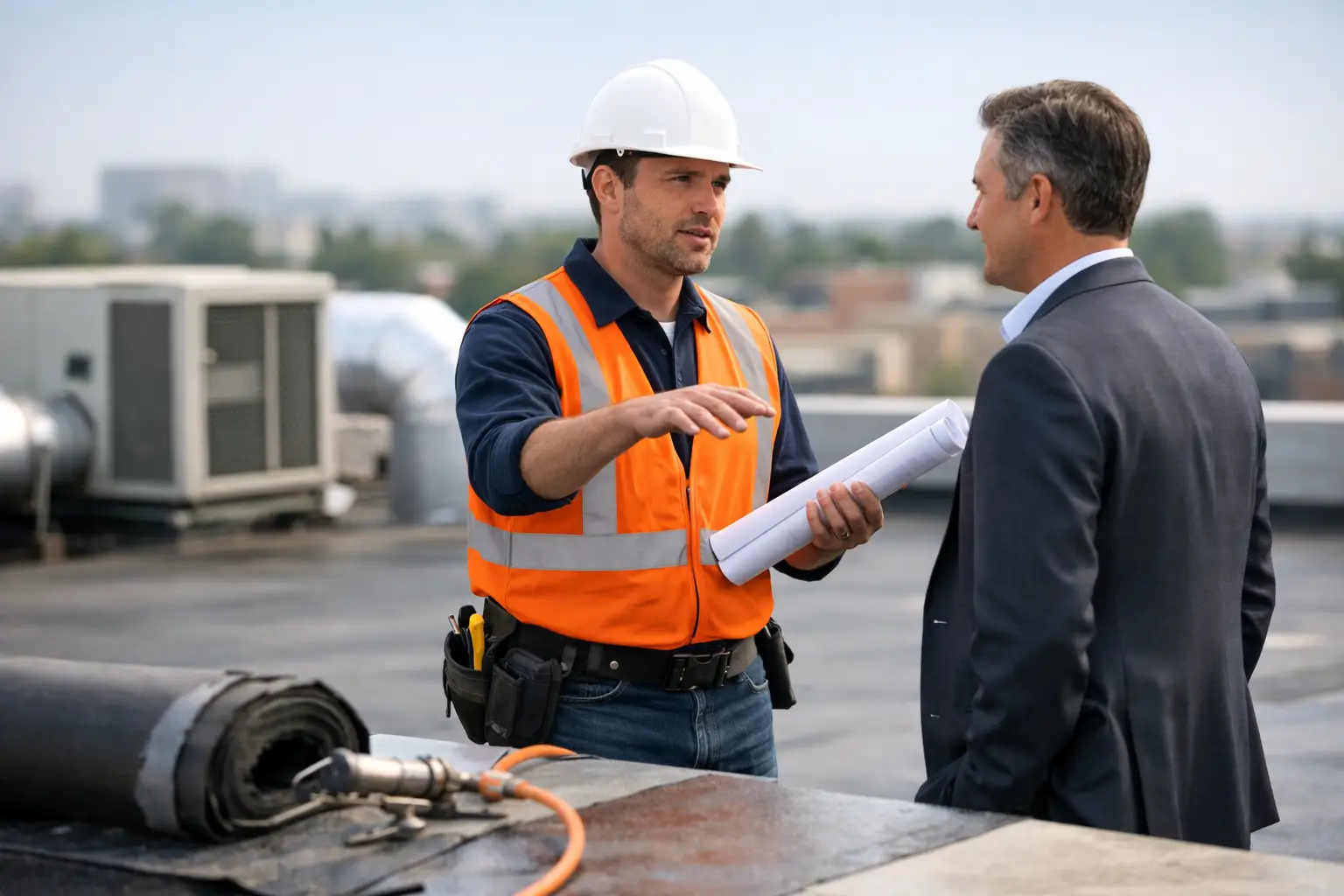
A qualified commercial roofing contractor does more than provide a quote and schedule a crew. They should evaluate the condition of the existing roof, explain whether repair or replacement makes more financial sense, recommend systems that fit your building, and map out how work will affect access, safety, and operations.
That last point is often overlooked. Commercial projects have more moving parts than most property owners expect. There may be rooftop units, drainage concerns, parapet walls, code requirements, insulation upgrades, occupied spaces, delivery schedules, and weather exposure to manage. A dependable contractor plans for those details before work begins, not after problems show up.
They should also be prepared to speak clearly about warranties, manufacturer requirements, material compatibility, and the expected life cycle of the system they are recommending. If every answer sounds vague or rushed, that is usually a warning sign.
How to evaluate a commercial roofing contractor
The best hiring decisions usually come down to a few practical factors. Experience matters, but relevant experience matters more. A contractor who mainly handles small residential jobs may not be the right fit for a flat or low-slope commercial system with drainage and membrane concerns.
Ask what types of commercial roofs they install and service regularly. TPO, EPDM, PVC, modified bitumen, metal, and roof coatings all have different strengths, limitations, and installation standards. A good contractor should explain those differences in plain language and connect the recommendation to your building rather than pushing one option for every job.
It also helps to look at how they manage the full process. Are inspections thorough? Is the estimate clear? Do they explain what is included, what could change, and what conditions might affect cost or timing? Commercial roofing projects do not always go exactly as planned, especially when hidden moisture or substrate damage is discovered. What you want is a contractor who communicates early, documents findings, and gives you options instead of surprises.
Commercial roofing contractor bids are not all equal
It is tempting to compare proposals by price alone, especially on larger projects where the spread between estimates can be significant. But lower bids often leave out details that matter later. One contractor may include tear-off, insulation upgrades, edge metal, flashing replacement, and cleanup, while another prices only the most basic scope.
That does not mean the highest bid is automatically the best, either. The right comparison is scope against scope. Look at the materials being specified, the labor included, the projected timeline, the warranty coverage, and whether the contractor has accounted for building-specific conditions.
If a proposal feels thin, ask questions. What happens if wet insulation is found? Are permits included? Who is responsible for protecting equipment, landscaping, or tenant access points during the project? A trustworthy commercial roofing contractor should be comfortable walking through the estimate line by line.
Repairs, restoration, or replacement
Not every roof needs full replacement. In some cases, targeted repair or restoration can extend service life and delay a larger expense. That is especially true when the roof has isolated damage but the overall system is still structurally sound.
The challenge is that short-term savings do not always equal long-term value. Repeated patching on an aging roof can become more expensive than planned replacement, particularly if leaks begin affecting interiors, insulation, inventory, or equipment. A strong contractor will help you weigh cost against remaining roof life, maintenance history, and business risk.
This is where honesty matters. If a contractor recommends replacement every time, that is not a sign of expertise. If they recommend repairs without addressing broader deterioration, that is not helpful either. The best guidance is grounded in the actual condition of the roof and your goals for the property.
Why communication matters on commercial projects
A commercial roof project affects more than the roof. It can affect staff routines, customer access, noise levels, parking, deliveries, and tenant expectations. Even a technically solid installation can become a frustrating experience if communication is poor.
A dependable contractor sets expectations early. They explain scheduling, staging, daily cleanup, weather delays, and what building occupants should expect during each phase. They also identify one point of contact, so questions do not get lost between sales, production, and field crews.
For occupied properties, this is not a small issue. Clear communication reduces disruption and helps everyone plan around the work. It also builds trust when unexpected conditions come up, which is common in roofing. You want a contractor who stays ahead of issues instead of waiting for complaints.
Warranties, workmanship, and long-term protection
Roofing proposals often mention warranties, but not all warranties protect you the same way. Some cover materials only. Others include workmanship for a defined period. Manufacturer-backed coverage may require approved products and certified installation methods.
That is why warranty language deserves a closer look. A roof is only as reliable as the people installing it and the system behind it. Strong workmanship standards, premium materials, and documented installation practices usually matter more than a big warranty number printed on a brochure.
For property owners, long-term protection comes from the combination of product quality and contractor accountability. That is one reason many decision-makers prefer established contractors with recognized certifications and a clear process from inspection through final walkthrough. In a market like the Twin Cities, where storms, snow load, freeze-thaw cycles, and drainage issues can all put stress on a roof system, those details matter.
Storm damage and insurance considerations
Commercial roofing decisions often happen after hail, wind, or another severe weather event. In those situations, speed matters, but so does documentation. A contractor should be able to inspect the roof thoroughly, identify storm-related damage, and provide clear records that support the next steps.
Insurance-related projects can get complicated quickly. Damage may not be obvious from the ground, and adjuster reports do not always capture every issue affecting the roof assembly. A contractor with storm restoration experience can help identify what has been damaged, what needs immediate protection, and what should be included in the scope.
That support should feel organized, not aggressive. You want a contractor who advocates for the property without overpromising outcomes they cannot control. Good documentation, clear communication, and a disciplined process usually make a bigger difference than dramatic sales language.
What confidence looks like before you sign
Before you choose a commercial roofing contractor, you should feel clear on three things. First, you should understand the condition of your roof and the reasoning behind the recommendation. Second, you should know what the project includes, how it will be managed, and what protections are in place if conditions change. Third, you should trust that the contractor will still be responsive after the final invoice is paid.
That confidence usually shows up in small but telling ways. The inspection is detailed. The estimate is specific. Questions get answered directly. The contractor talks about your building and priorities, not just their crew and availability.
For commercial property owners, that is what a good roofing partner looks like. Not the loudest bid. Not the fastest promise. Just a contractor who understands that your roof is part of how you protect your investment, your tenants, and your day-to-day operations. If you find a team that treats the job with that level of ownership, you are already making a better decision than most.