Table of Contents
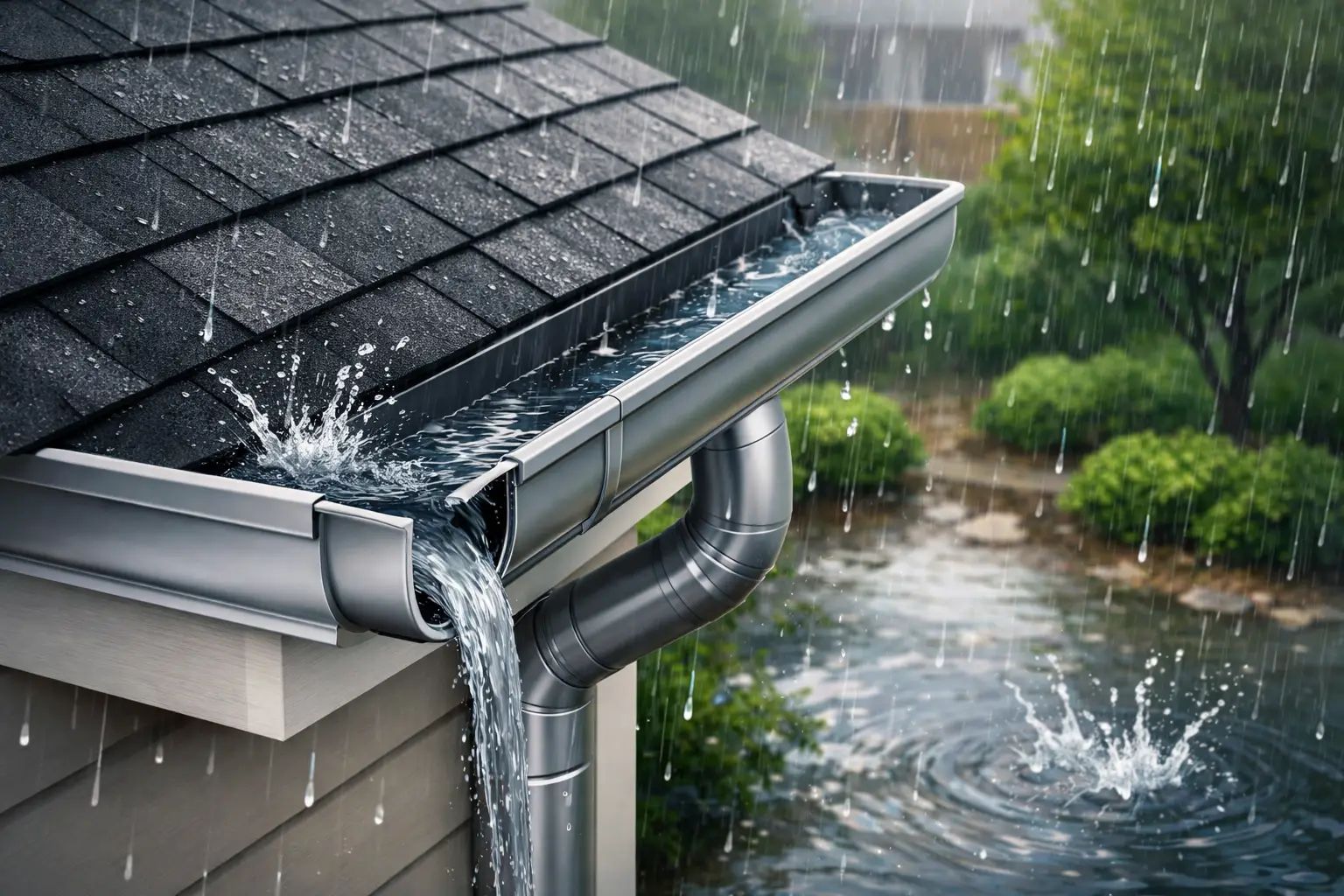
ToggleA hard summer downpour can expose every weak point on a home in minutes. If water is shooting over the gutter edge, pouring at the corners, or pooling near the foundation, the issue is not just messy runoff. It is a drainage system that is falling behind. For many homeowners, seamless gutters for heavy rain are the most reliable way to move water off the roof quickly and keep the rest of the exterior protected.
Gutters do more than catch rain. They manage how water leaves the roofline, where it lands, and whether it stays away from fascia, soffit, siding, landscaping, and the foundation. In Minnesota, that job gets even more demanding because the same system has to handle intense rain, spring thaw, debris, and seasonal stress. That is why gutter performance is less about appearance and more about capacity, fit, and installation quality.
Why heavy rain overwhelms standard gutter systems
When gutters fail during a storm, the gutter itself is not always the only problem. Sometimes the issue is size. Sometimes the pitch is off. Sometimes the downspouts cannot move water away fast enough. And in many cases, sectional gutters with multiple joints start to leak or sag long before the roof is done shedding water.
Heavy rain creates fast runoff, especially on larger roof slopes. Water does not trickle into the channel. It comes off the shingles with speed and volume. If the gutter opening is too small, if the trough is installed too high or too low, or if the downspout layout is limited, water can overshoot the system entirely.
That overflow has consequences beyond a wet driveway. Repeated runoff can stain siding, rot trim, loosen fascia, erode soil, and increase the chance of basement moisture problems. On commercial buildings and larger homes, poor drainage can also put more stress on entryways, walkways, and landscaping.
What makes seamless gutters for heavy rain a better option
The biggest advantage of seamless gutters is right in the name. They are formed in long continuous sections to match the home, which means there are far fewer joints along the run. Fewer joints means fewer places for leaks to develop over time.
That matters during heavy rain because the system is under more pressure. Every seam, fastener, and corner becomes a potential weak spot when water volume spikes. A custom-fit gutter system reduces those failure points and creates a cleaner path for water to move toward the downspouts.
Seamless gutters also tend to hold alignment better when they are professionally installed with the correct hangers and spacing. That helps them keep their pitch and carry water as intended. For homeowners who are trying to avoid recurring overflow, staining, or sagging sections, that custom fabrication makes a real difference.
There is also a curb appeal benefit, but performance should come first. A gutter system can look sharp and still underperform if it is undersized or poorly planned. For heavy rain, capacity and layout always matter more than cosmetics.
Size matters more than most homeowners expect
If your current gutters overflow during strong storms, upgrading from sectional to seamless may help, but the profile and size are just as important. Many homes have 5-inch gutters because they are common and cost-effective. For some rooflines, that is enough. For steeper roofs or larger drainage areas, 6-inch gutters may be the better fit.
That extra inch does not sound dramatic, but it increases water-handling capacity in a meaningful way. In a high-volume rain event, that added capacity can be the difference between controlled drainage and water spilling over the front edge.
Downspouts matter just as much. A larger gutter feeding undersized or poorly placed downspouts still creates a bottleneck. If the system cannot move water down and away fast enough, the trough fills up and starts to overflow. A strong gutter design looks at the full path of drainage, not just the horizontal channel.
This is where a professional assessment pays off. Roof square footage, pitch, valleys, slope transitions, and discharge points all affect gutter sizing. There is no single setup that fits every home.
Installation details that affect performance
Good materials are only part of the equation. A gutter system is only as strong as its installation. Small errors in slope, spacing, or fastening can lead to big performance problems once the rain starts.
Pitch is one of the most overlooked details. Gutters need enough slope to keep water moving, but not so much that they look uneven or create low-capacity sections. The goal is steady drainage toward the downspouts without visible dips or standing water.
Attachment strength matters too. Gutters carrying heavy rainwater are under weight and stress. If the hangers are too far apart or secured into failing fascia, the system can pull away over time. That is especially important on homes where trim or wood components have already seen moisture damage.
Placement along the roof edge also affects how much water the system actually captures. If gutters sit too far forward or back, fast-moving runoff can miss the trough. On roofs with valleys, the concentrated flow may require special attention because a huge amount of water can dump into one section very quickly.
The trade-offs homeowners should know
Seamless gutters are a strong upgrade, but they are not a cure-all by themselves. If someone promises that new gutters will solve every drainage issue without looking at roof design, grading, or discharge areas, that is a red flag.
For example, if downspouts empty too close to the house, you can still end up with foundation moisture even when the gutters are working properly. If the roof has problem areas or the fascia is already compromised, those issues should be addressed during the project rather than covered up.
There is also the cost question. Seamless systems usually cost more upfront than sectional gutters because they are custom-fabricated and professionally installed. But for many property owners, that higher initial investment is offset by fewer leaks, less maintenance, better durability, and stronger long-term protection.
The right choice depends on the building, the roofline, and what problems you are trying to solve. If your current system is simply old but still sized correctly, replacement may be straightforward. If the home has chronic overflow or drainage damage, a more complete redesign may be the smarter move.
Do gutter guards help in heavy rain?
Sometimes. Gutter guards can help reduce clogs from leaves, twigs, and debris, which is important because blocked gutters lose capacity fast. But not every guard performs well in heavy rain.
Some products restrict water entry or allow runoff to shoot past the opening during intense storms. Others work well when paired with the right gutter size and roof conditions. That is why gutter guards should never be chosen as a stand-alone fix. They need to complement the gutter system, not interfere with it.
If a property has a lot of nearby trees, guards may be worth considering. But the conversation should start with proper sizing, slope, and downspout design first.
Why this matters in Minnesota
In the Twin Cities and surrounding areas, gutter systems are not dealing with rain alone. They also face freeze-thaw cycles, ice buildup, wind-driven storms, and debris from mature trees. A gutter that struggles in July is not likely to perform better in March.
That is why homeowners often benefit from looking at gutters as part of a broader exterior protection plan. The roof, fascia, soffit, and drainage system all work together. If one part is underperforming, the stress tends to show up somewhere else.
A contractor who understands both roofing and water management can spot issues that get missed in a basic gutter replacement. That might include roof runoff patterns, signs of fascia rot, storm-related wear, or problem areas around valleys and transitions. Roofs R Us approaches gutter work with that larger protection mindset, which is especially valuable on homes that have already seen water-related exterior damage.
When it is time to replace instead of repair
Some gutter problems can be repaired. A loose section, isolated leak, or minor pitch correction may not require full replacement. But if the system has repeated joint failures, visible sagging, chronic overflow, corrosion, or signs of fascia damage, repair can become a short-term patch on a long-term problem.
A replacement is usually the better call when the existing gutters were undersized from the start or when the home has had persistent drainage issues through multiple storm seasons. In those cases, installing seamless gutters for heavy rain is not just an upgrade. It is a correction that helps protect the rest of the exterior investment.
The best gutter system is the one that handles the worst storm without turning your roofline into a waterfall. If heavy rain has already shown you where your current setup falls short, it may be time to stop treating the symptom and start fixing the drainage path the right way.