Table of Contents
ToggleA gutter system can look fine on a calm day and still fail the moment a hard storm rolls through. When water spills over the front edge, backs up under shingles, or dumps next to the foundation, the problem usually is not just age. It is that the system was never built for the volume of water your home sees. If you are comparing the best gutters for heavy rain, the right answer usually comes down to capacity, fit, and installation quality – not just the gutter material.
For homeowners, that matters because overflow does more than create a mess. It can stain siding, wash out landscaping, contribute to basement moisture, and speed up fascia rot. In places like Minnesota, where heavy rain can show up with strong storms and seasonal weather swings, that added water load puts real stress on the entire exterior.
What makes gutters good in heavy rain
The best-performing gutters in downpours move water quickly without letting it jump the trough or bottleneck at the downspouts. That means the system needs enough width and depth, the right slope, and downspouts that are sized and placed correctly.
A lot of homeowners focus first on the gutter style, but capacity is the bigger issue. A small gutter on a steep roof can be overwhelmed even if it is brand new. On the other hand, a properly sized system with clean lines and secure fastening can handle serious rainfall much better.
Roof design also changes the equation. A large roof plane dumps far more water into the gutter than a smaller section. Steeper roofs shed water faster, which can cause overshooting during intense storms. Valleys concentrate runoff into one area, often creating the exact spots where overflow starts.
Best gutters for heavy rain by style
K-style gutters are the most practical choice for most homes
For many residential properties, K-style gutters are the best gutters for heavy rain because they carry more water than traditional half-round gutters of the same nominal width. Their shape helps them hold higher volume, and they match the look of most modern homes.
A standard 5-inch K-style gutter works on many houses, but it is not automatically enough for every roof. If your home has long roof runs, steep pitches, or frequent overflow, moving up in size can make a major difference.
6-inch gutters offer more protection where storms hit hard
When homeowners are dealing with repeated overflow, 6-inch K-style gutters are often the upgrade that solves it. They can handle a larger volume of runoff and are especially useful on bigger homes or roofs with concentrated drainage areas.
This is one of the most common recommendations when a home sits under mature trees, has multiple roof valleys, or has already shown signs of water management problems. They cost more than 5-inch systems, but the added capacity is often worth it when the goal is long-term protection.
Half-round gutters look clean but usually hold less water
Half-round gutters can be a good fit on historic or high-end homes where appearance is a priority. They also tend to shed debris well. But for pure storm performance, they usually do not offer the same capacity as K-style gutters in a comparable size.
That does not mean they are a bad product. It means they need to be chosen carefully. If a home regularly sees heavy runoff, half-round gutters may need a larger size or more drainage support to keep up.
Material matters, but not as much as sizing
Aluminum is the leading choice for most homes
Aluminum remains the most common gutter material for good reason. It resists rust, keeps weight manageable, and comes in seamless options that reduce leak points. For most residential properties, professionally installed seamless aluminum gutters offer the best balance of performance, appearance, and value.
The key is using material with enough strength for the span and weather conditions. Thin, low-grade aluminum can warp or struggle under snow and ice loads. Heavier-gauge aluminum holds up better, especially in climates where exterior systems take a beating.
Steel is stronger, but it comes with trade-offs
Steel gutters are tougher and can be a smart option where durability is the top concern. They handle impact well and feel more substantial than aluminum. That said, they are heavier, often cost more to install, and can be vulnerable to rust over time if coatings are damaged.
For some commercial properties or homes with demanding drainage conditions, steel may make sense. For many homeowners, premium aluminum still delivers the better mix of protection and practicality.
Copper is durable and premium, but rarely chosen for storm capacity alone
Copper gutters perform well and last a long time when installed correctly. They also bring a distinctive appearance that some homeowners want. But if your main concern is simply finding the best system for heavy rain, copper is usually a design-driven upgrade rather than the most cost-effective performance decision.
Why seamless gutters are usually the smarter investment
Seams are weak points. They are where leaks, separation, and debris buildup tend to start. That is why seamless gutters are often the best option for heavy rain. With fewer joints, water moves more cleanly through the system, and there are fewer places for failure over time.
Seamless gutters also tend to look cleaner on the home. More importantly, they are custom-fit to the structure. That matters because good gutter performance depends on precise alignment, proper pitch, and secure attachment – not just the gutter itself.
At Roofs R Us, seamless gutter systems are a natural extension of protecting the roofline, fascia, and foundation as one connected exterior system. That kind of full-picture approach is what helps prevent repeat problems instead of patching symptoms.
Downspouts are part of the answer, not an afterthought
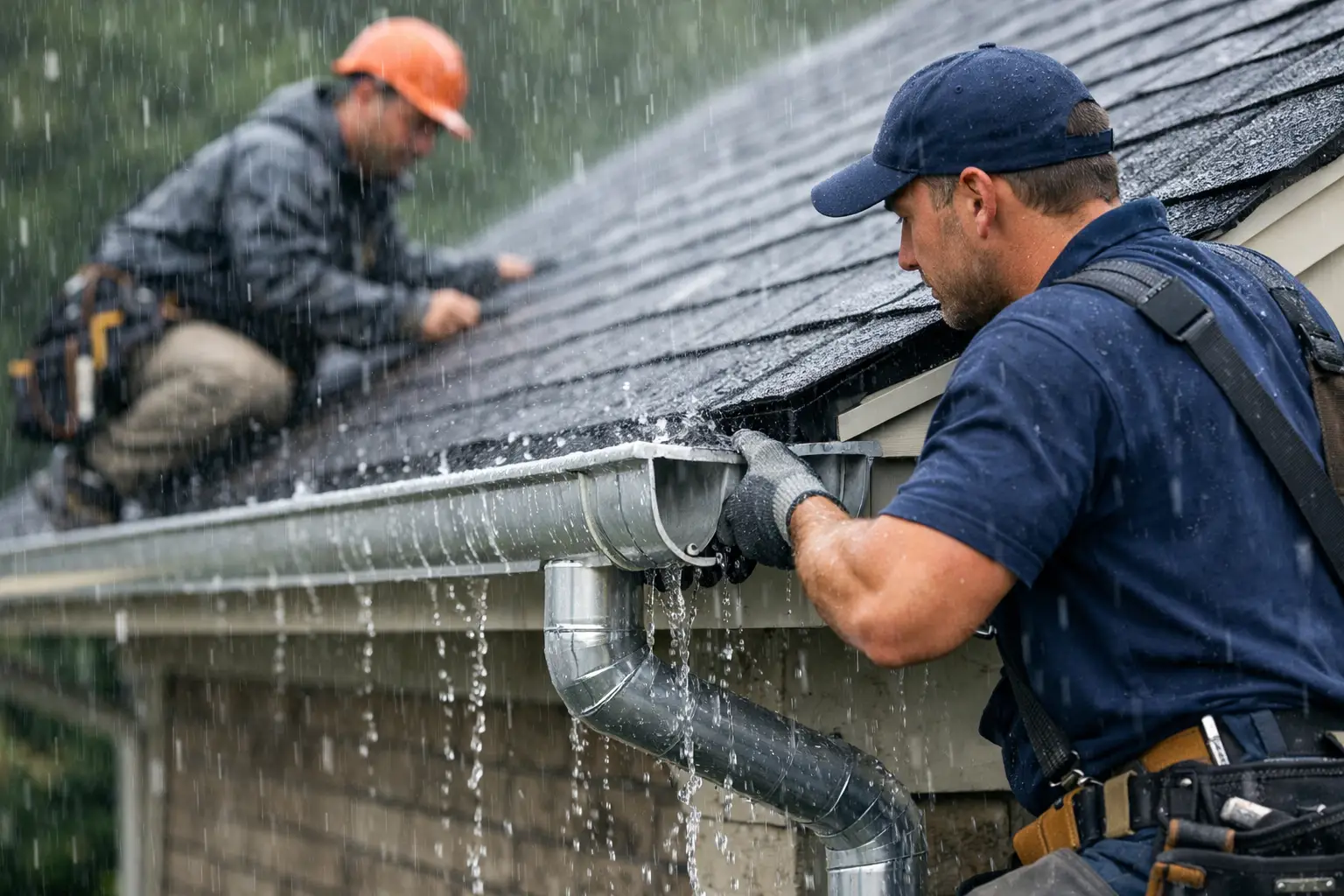
A large gutter will still struggle if the downspouts cannot move water out fast enough. This is one of the most overlooked reasons systems fail during heavy rain.
In many cases, improving performance means adding oversized downspouts, increasing the number of downspouts, or adjusting placement near problem roof sections. If one corner of the home always overflows, the issue may not be the gutter trough at all. It may be a drainage bottleneck.
Extensions and discharge planning matter too. Water should be directed away from the foundation in a controlled way. Otherwise, even a well-sized gutter system can create trouble where the water exits.
Are gutter guards worth it in heavy rain?
They can be, but only if they are matched to the home and installed correctly. Gutter guards help reduce clogs from leaves, seed pods, and debris that block water flow during storms. That is a real benefit, especially on homes surrounded by trees.
Still, not every guard performs equally well in intense rain. Some products can cause water to skim over the surface instead of entering the gutter when rainfall is especially heavy. Others work well with certain roof pitches but not others.
This is one of those it-depends decisions. If clogging is part of the problem, a quality guard system may improve performance and reduce maintenance. If the real issue is undersized gutters or poor pitch, guards alone will not fix it.
Signs your current gutters are too small or poorly designed
Overflow is the obvious warning sign, but it is not the only one. Water streaks on siding, eroded mulch beds, peeling paint near the roofline, and puddling around the foundation all suggest the system is not controlling runoff the way it should.
You may also notice standing water in the gutters after rain. That often points to poor slope or sagging sections. Fasteners pulling loose, especially near seams or corners, can signal that the system is under strain or was not mounted securely enough.
If these issues keep showing up after cleaning, the problem is probably not maintenance. It is likely design, sizing, or installation quality.
How to choose the best gutters for your property
For most homes dealing with strong storms, the safest recommendation is a seamless 6-inch K-style aluminum gutter system with properly sized downspouts. That is not the right answer for every property, but it is often the strongest starting point for heavy-rain performance.
The final decision should account for roof size, pitch, valleys, tree coverage, fascia condition, and how water drains away from the building once it leaves the downspouts. Commercial buildings bring additional factors like roof drainage layout, code requirements, and traffic around discharge areas.
That is why a real inspection matters. The best gutter system is not just the biggest one. It is the one designed to manage the exact water load your roof creates without shifting the problem somewhere else.
If your gutters overflow every time a serious storm hits, replacing them with the same size and layout is rarely the best move. A better system should give you more than a new look. It should give your home or building a stronger line of defense the next time the rain comes down hard.