Table of Contents
ToggleThe morning after a strong windstorm, your roof can look fine from the driveway and still have damage that turns into leaks weeks later. Knowing how to spot wind roof damage early helps you protect your home, document problems for insurance, and avoid a much bigger repair bill down the road.
Wind damage is not always dramatic. Sometimes a few lifted shingles or loosened flashing are enough to let water in. In Minnesota, where storms can hit hard and seasons put extra stress on roofing materials, small problems can escalate quickly if they are missed.
How to spot wind roof damage from the ground
A safe inspection always starts from the ground. You do not need to climb onto your roof to notice the most common warning signs, and in many cases, you should not. Wind-damaged roofing can be unstable, especially after a recent storm.
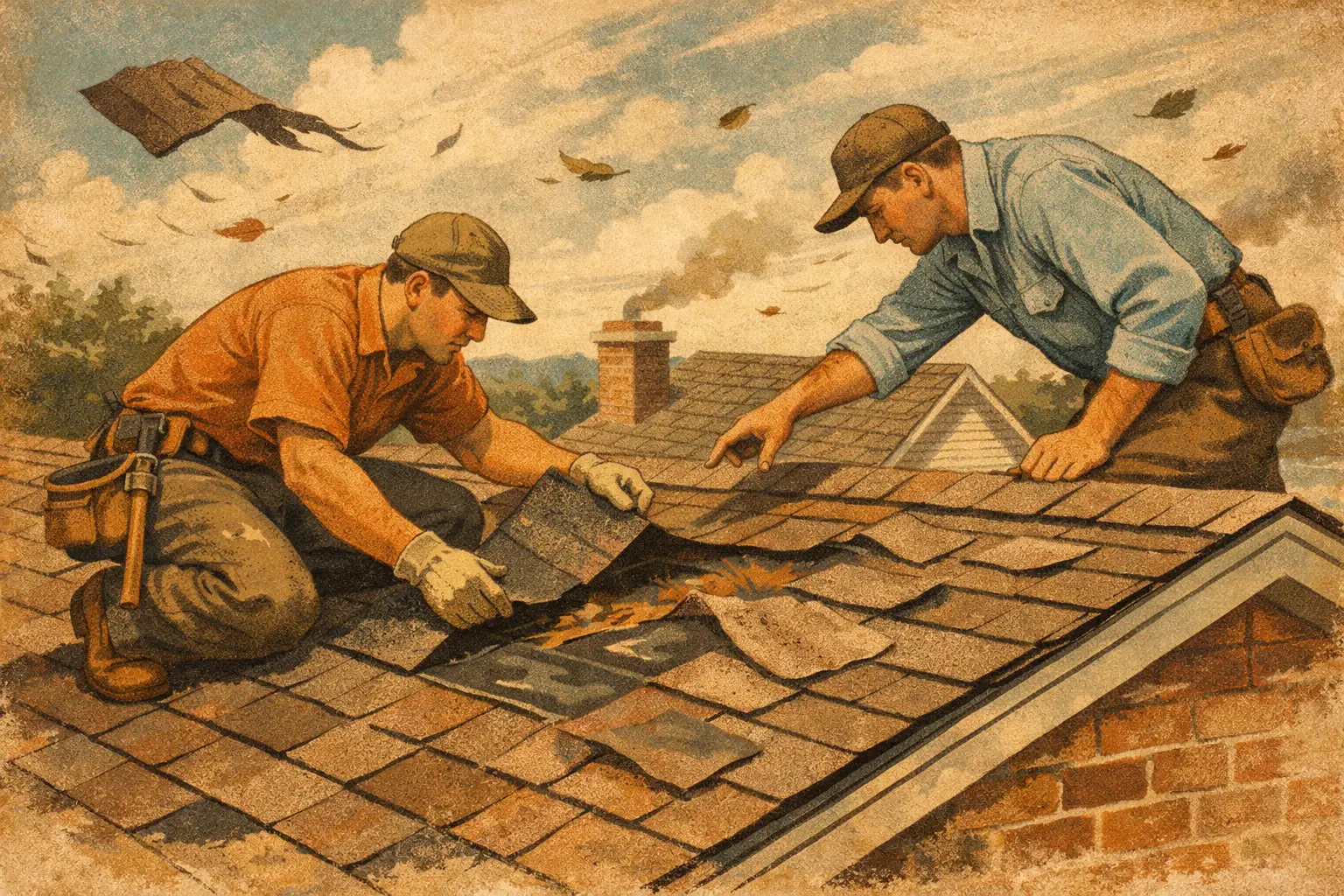
Walk the perimeter of your home and look for changes in the roofline. If a section appears uneven, lifted, or out of place, that can point to shingles that have broken seal strips or shifted under pressure. Missing shingles are the easiest sign to spot, but they are not the only one. Shingles that are curled at the edges, creased down the middle, or flapping slightly can also indicate wind damage.
Pay attention to what is on the ground, too. If you find pieces of shingles, exposed nails, or granules collecting in downspout outlets, your roof may have taken more force than it appears. Granule loss alone does not always mean a full replacement is needed, but it is a sign the protective surface of the shingle may be wearing away faster after a storm.
Your gutters and metal trim can also tell the story. Wind can loosen fascia trim, bend gutters, or pull at drip edge components. If those parts have shifted, the roof system may have been stressed at the edges, where wind uplift often starts.
The most common signs of wind roof damage
When homeowners ask how to spot wind roof damage, they are usually thinking about missing shingles. That matters, but wind often causes more subtle failures first.
Lifted or unsealed shingles
Strong wind gets under the bottom edge of a shingle and breaks the adhesive seal that holds it in place. Once that seal is gone, the shingle may still sit flat for a while, which makes the damage easy to miss. But the next storm can catch that loose edge and peel the shingle back even more.
This is one reason a roof can leak after a later rainfall even though the original windstorm seemed to pass without obvious problems.
Creased shingles
A horizontal or diagonal crease in an asphalt shingle is a serious sign. It often means the shingle bent under wind pressure and was weakened at that fold line. Even if it has not blown off yet, it may have a shorter life and reduced ability to protect the roof deck.
Missing ridge cap shingles
The ridge is one of the most exposed parts of any roof. Wind damage often shows up there first, especially on older roofs or roofs with materials that have already seen years of weather exposure. If ridge cap shingles are gone or misaligned, the roof is more vulnerable to water intrusion.
Damaged flashing and roof penetrations
Chimneys, vents, skylights, and wall intersections rely on flashing to keep water out. Wind can loosen or bend those metal components, creating small entry points for water. The shingles around these details might still look intact, so this kind of damage is often overlooked during a casual inspection.
Signs inside the home that point to roof damage
Sometimes the clearest evidence is indoors. If wind has compromised the roofing system, water may show up inside before the damage is obvious from outside.
Look for new ceiling stains, peeling paint near the top of walls, damp insulation in the attic, or a musty smell after rain. In the attic, sunlight coming through the roof boards is another warning sign. These symptoms do not always confirm wind damage on their own, but after a major storm, they should raise concern.
It also helps to notice timing. If a stain appears shortly after a wind event, the connection is more likely. That detail can matter later if you need to document the issue for an insurance claim.
Why wind damage is easy to underestimate
Wind damage does not always create an immediate leak. That is what makes it risky. A roof can lose shingles, adhesive seals, or flashing integrity and still keep water out for a short time. Then another storm hits, or normal rain works under the weakened areas, and the problem gets more expensive.
Age matters here. A newer roof may resist uplift better, while an older roof with brittle shingles is more likely to crack, crease, or lose sections. Roof design matters too. Steeper slopes, high ridges, corners, and roof edges often take the most pressure. Trees, nearby buildings, and wind direction can change where damage appears, so there is no single pattern that applies to every property.
That is why a roof should be inspected based on what actually happened during the storm, not just on whether damage is obvious from one angle in the yard.
What to do after you notice possible wind damage
Start with photos. Take clear pictures of any missing shingles, displaced metal, debris in the yard, and any interior signs like ceiling stains. If it is safe, photograph multiple sides of the home so there is a record of overall condition.
Next, avoid quick assumptions. Not every lifted shingle means full roof replacement, and not every small issue should be ignored. The right next step is a professional inspection that looks at the full roofing system, including shingles, flashing, ventilation details, and vulnerable transitions.
For homeowners and property managers, this is where working with an experienced contractor makes a difference. A thorough inspection should identify whether the damage is isolated, widespread, repairable, or severe enough to justify replacement. It should also give you documentation you can use if insurance becomes part of the process.
When to call for a professional roof inspection
If you can see missing shingles from the ground, call. If you notice bent flashing, fallen roofing material, interior staining, or debris after a major windstorm, call. If your roof is older and your neighborhood took heavy wind, it is smart to schedule an inspection even when the signs are less obvious.
Commercial properties deserve the same caution. On low-slope and commercial roofing systems, wind damage can affect membrane edges, coping caps, and seams in ways that are harder to spot without training. The surface may look mostly intact while edge details have already been compromised.
A professional inspection is also valuable because it creates clarity. You get a better understanding of what is actually damaged, what can wait, and what should be addressed before the next round of weather arrives.
How to spot wind roof damage without risking your safety
The safest rule is simple: inspect from the ground and from inside the attic, then bring in a professional for the roof-level evaluation. Climbing onto a storm-damaged roof can lead to injury, and even a ladder inspection has risks if the ground is wet or debris is present.
Binoculars can help you get a closer look at shingle lines, ridge caps, and roof edges. A smartphone camera with zoom can also capture areas that are hard to see from the yard. These tools are useful for spotting changes, but they are not a substitute for a hands-on inspection by someone who knows how wind affects different roofing systems.
In a place like the Twin Cities metro, where storms can vary from one neighborhood to the next, local experience matters. A contractor who regularly assesses storm-related roofing issues will know what patterns to look for and how to document damage clearly.
Protecting a roof is really about protecting everything under it. If you suspect wind damage, trust what the signs are telling you and get it checked before a small weak spot becomes a bigger problem.