A roof can look fine from the driveway and still have problems that are quietly getting worse. A lifted shingle, soft decking, failing flashing, or hidden hail damage may not show obvious signs until water gets inside. That is why homeowners and property managers often ask, what is a roof inspection, and do I really need one if there is no active leak?
A roof inspection is a professional assessment of your roofing system to identify damage, wear, weak points, and remaining life. It is not just a quick glance at shingles. A proper inspection looks at the roof as a full protection system, including materials, flashing, drainage, ventilation, penetrations, and signs of moisture intrusion. The goal is simple: catch issues early, understand the roof’s condition clearly, and make informed decisions before minor damage turns into a larger repair or replacement.
What is a roof inspection meant to tell you?
At its core, a roof inspection answers three practical questions. First, is the roof currently protecting the property the way it should? Second, are there signs of damage or aging that need attention now? Third, what should the owner expect next, whether that means maintenance, repair, or planning for replacement?
That matters because roofing problems are not always dramatic at the start. In Minnesota, freeze-thaw cycles, wind, hail, snow load, and ice dams can shorten the life of roofing materials or create isolated failures that spread over time. A roof inspection helps separate normal aging from damage that needs action.
For commercial properties, the value is similar but often broader. An inspection can reveal membrane issues, drainage problems, seam separation, punctures, flashing failures, and areas where standing water is increasing long-term risk. For building owners and managers, that information supports budgeting, maintenance planning, and tenant protection.
What happens during a roof inspection?
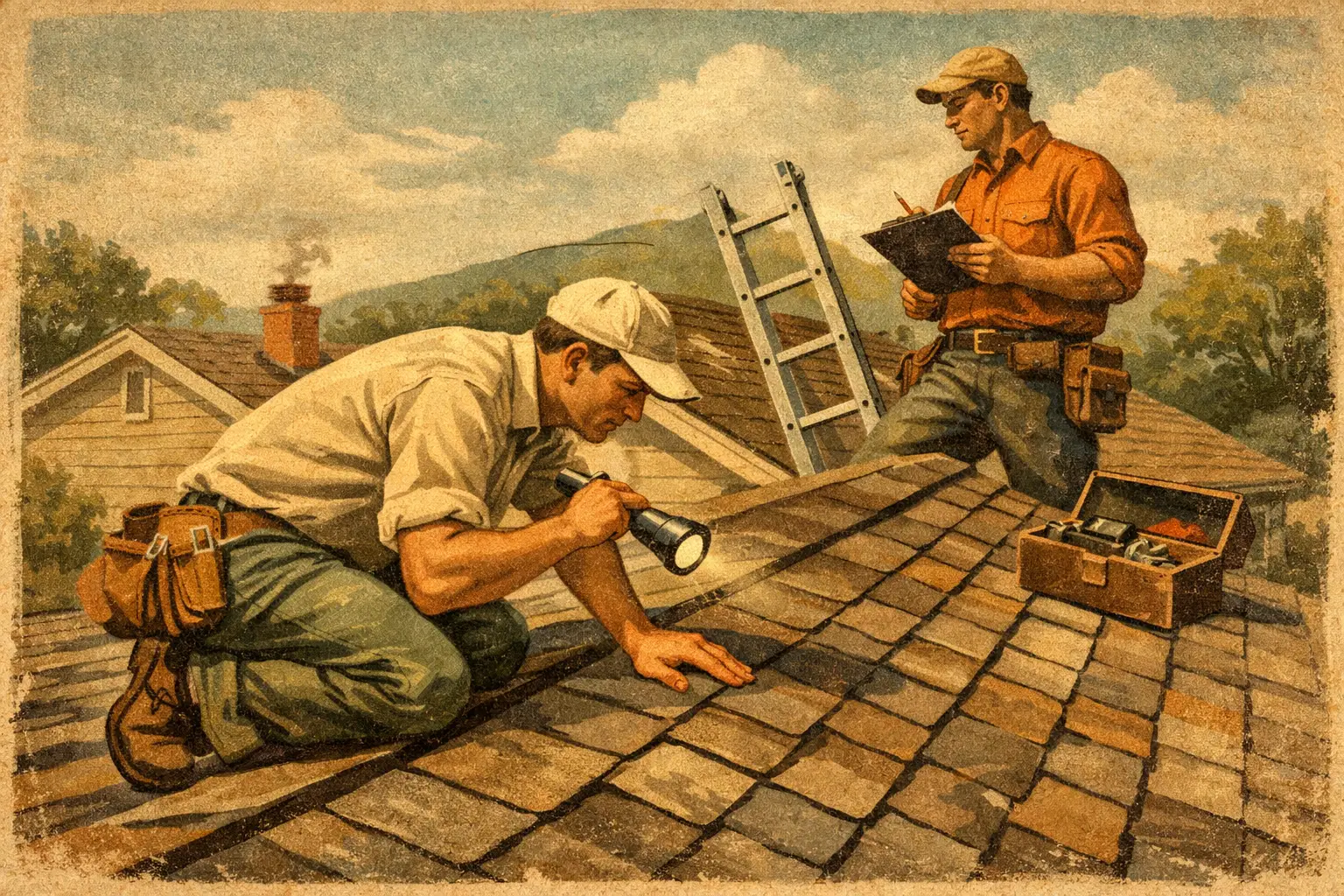
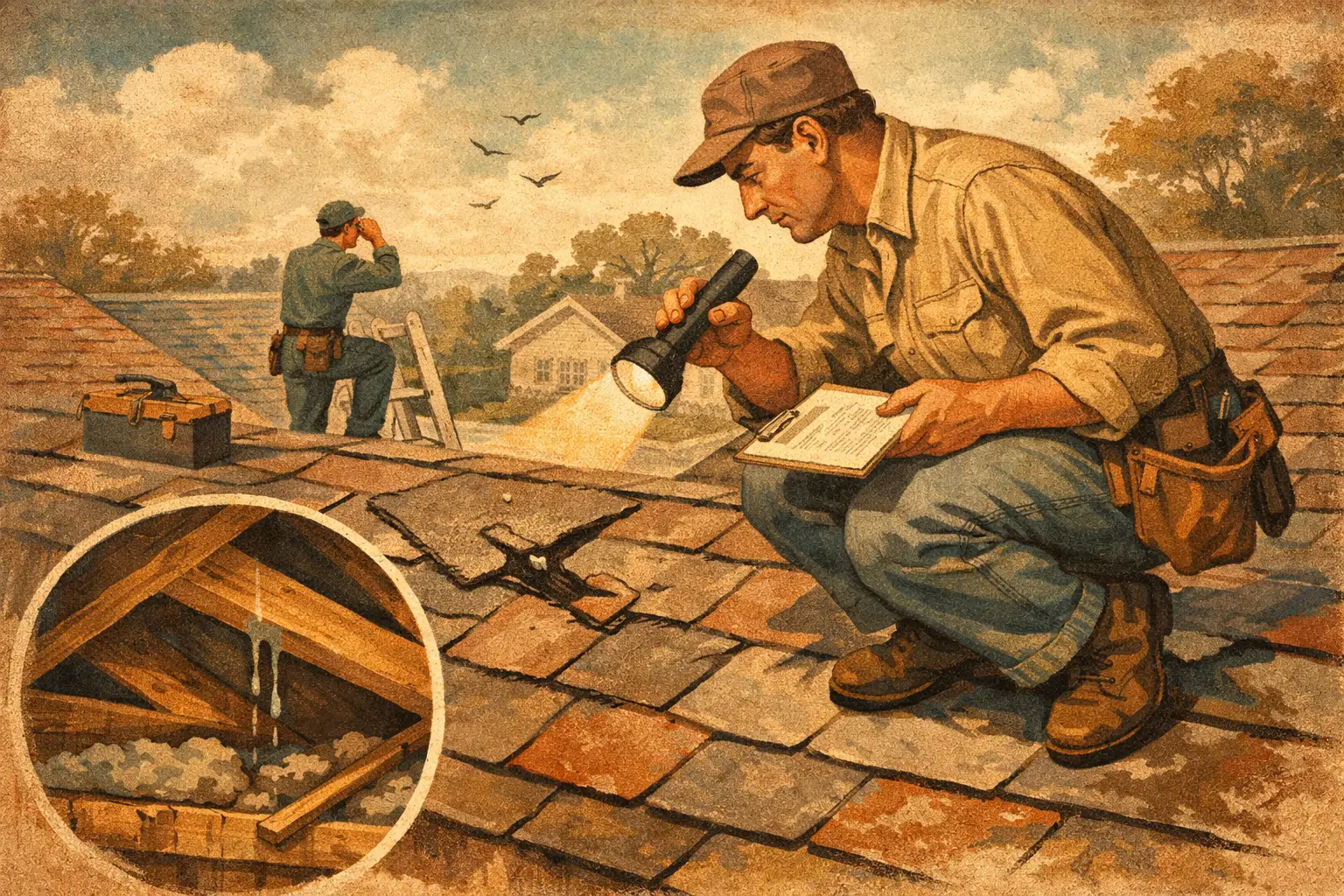
A professional roof inspection usually starts with a visual review of the roof’s exterior condition. The inspector checks the visible roofing materials for cracking, missing sections, granule loss, bruising, curling, or other signs of deterioration. They also look closely at problem-prone areas such as valleys, pipe boots, skylights, chimneys, wall transitions, and flashing details.
Gutters and drainage matter too. If water is not moving off the roof properly, even a newer roof can develop problems. An inspector may note clogged or damaged gutters, poor water flow, sagging sections, or signs that runoff is backing up near the roof edge.
The inspection may also include the attic or interior, depending on the property and the concern. That part can reveal moisture staining, mold growth, poor ventilation, insulation issues, and leaks that are not visible from the outside. In many cases, the attic tells the real story. A roof can appear decent on top while hidden moisture is already affecting the structure below.
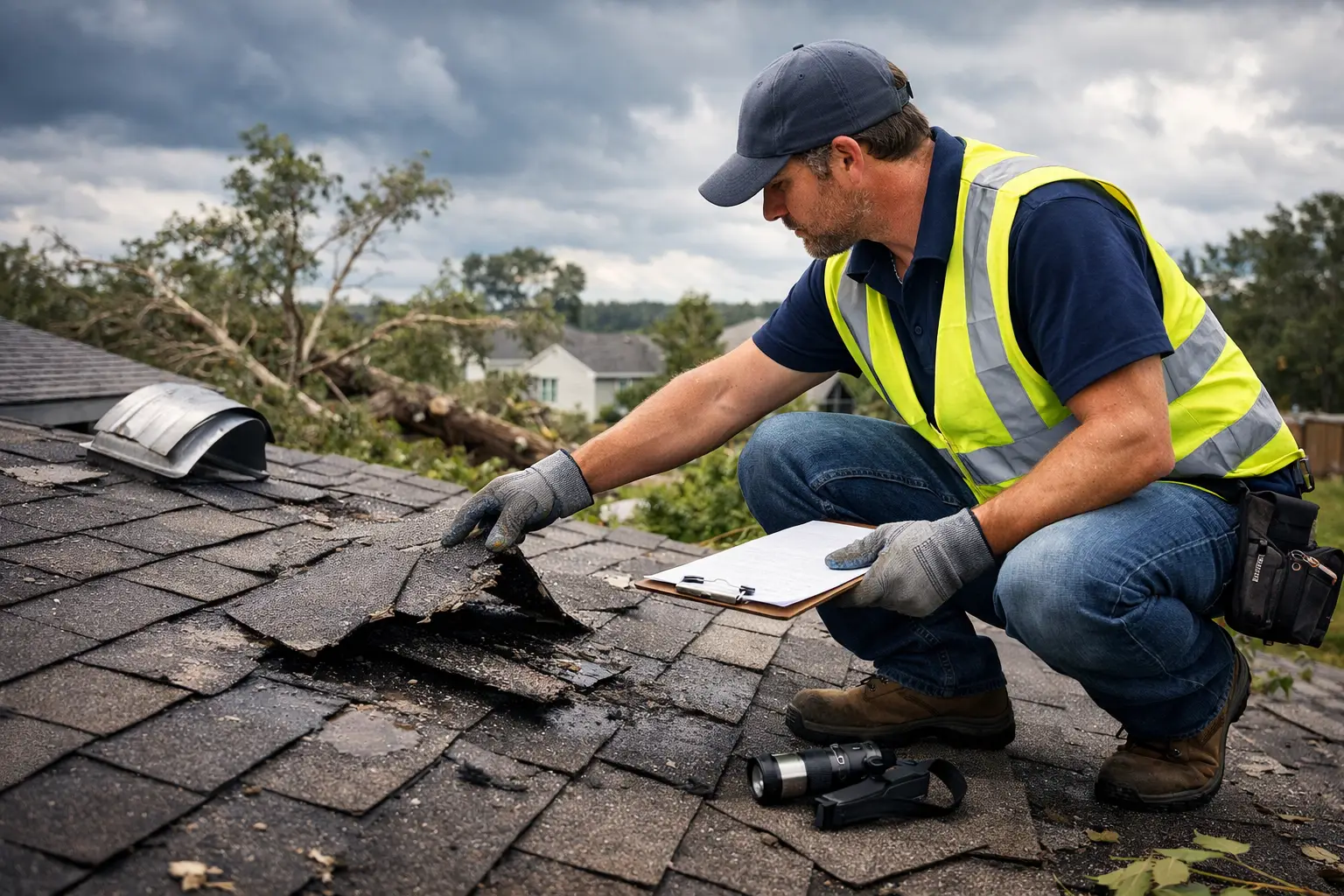
For storm-related concerns, the inspection becomes more focused. The contractor looks for wind creasing, hail impact marks, damaged accessories, lifted tabs, and collateral damage to metal components, siding, gutters, or soft metals. That documentation can be especially helpful if an insurance claim is part of the next step.
What a roof inspector is actually looking for
A quality inspection is less about checking boxes and more about understanding how the whole roofing system is performing. Shingles or membrane surfaces are only one part of it.
An inspector is evaluating whether the roof is shedding water correctly, whether materials are still holding up as intended, and whether vulnerable transitions are sealed and secure. They are also looking for signs of installation issues, not just weather damage. Improper nailing, poor flashing work, inadequate ventilation, and shortcuts around penetrations can all shorten roof life.
This is one reason experience matters. Two roofs can show similar symptoms but need very different solutions. For example, a stain on a ceiling might come from roof damage, but it could also be tied to condensation from poor attic ventilation. Recommending the wrong fix wastes money and leaves the real problem in place.
When should you schedule a roof inspection?
There is no single rule that fits every property, but some timing makes more sense than others. If your roof is older, has been through a major storm, or is showing signs like missing shingles, water stains, granules in gutters, or visible sagging, an inspection should move up the list.
Even without obvious warning signs, periodic inspections are a smart move. Many property owners schedule them after hail or high-wind events, before buying or selling a home, or as part of routine maintenance on an aging roof. For commercial buildings, regular inspections are often part of responsible asset management because small issues can grow into expensive disruptions.
In a climate like Minnesota, inspections after winter and after severe storm season can be especially valuable. Ice dams, snow buildup, and spring thaw can expose weak points that were easy to miss before.
What is a roof inspection not?
A roof inspection is not the same as a full replacement recommendation, and it should not feel like a pressure pitch. A trustworthy inspection gives you a clear picture of condition and options. Sometimes that means a minor repair is enough. Sometimes it means continued monitoring. And yes, sometimes it means the roof is at the end of its service life and replacement is the safer investment.
It is also not always a guarantee that every hidden issue will be visible immediately. Some damage is concealed until materials are lifted or water has had more time to travel. Good inspectors are honest about that. They explain what is visible, what is likely, and where uncertainty remains.
That transparency matters. Property owners need clear guidance, not guesswork and not scare tactics.
Why roof inspections save money
Most people think about roof inspections when they fear bad news. In reality, the process often protects your budget.
Finding a small flashing failure early is far less expensive than repairing soaked decking, damaged insulation, stained ceilings, and interior finishes months later. The same goes for commercial roofing. Catching seam failure or drainage issues early can help avoid larger repairs, interior damage, and business interruption.
Inspections also help with timing. If a roof is aging but still serviceable, you can plan for replacement instead of being forced into a rushed decision after a major failure. That gives you more control over budget, material choices, scheduling, and financing.
For storm damage, a documented inspection can also strengthen the claims process by identifying roof-related impacts clearly and early. That can reduce delays and help ensure the scope of damage is understood properly.
What is a roof inspection worth to a buyer or seller?
If a property sale is involved, a roof inspection can remove uncertainty on both sides. Buyers want to know whether they are inheriting a major expense. Sellers want to avoid surprises that can derail negotiations late in the process.
A professional inspection can clarify whether the roof is in good condition, needs repair, or should be factored into pricing discussions. It is not about making the roof look perfect. It is about creating a realistic understanding of condition and risk.
That kind of clarity is valuable because roofs are one of the most expensive systems on a property. A vague answer is rarely enough when money and timing are on the line.
Choosing the right contractor for a roof inspection
Not all inspections are equal. A quick look from the ground is not enough, and neither is a vague opinion with no explanation behind it. You want a contractor who understands both residential and commercial roofing systems, knows how local weather affects them, and can explain findings in plain language.
Look for a company with proven experience, strong workmanship standards, and a reputation for standing behind its recommendations. If storm damage is part of the concern, it also helps to work with a contractor who understands the insurance side and can document findings thoroughly.
That guidance should feel steady, not rushed. The right contractor helps you understand what matters now, what can wait, and what path gives you the best long-term protection.
For Minnesota property owners, that practical expertise matters. Weather here tests every part of an exterior system, and a reliable inspection can be the difference between staying ahead of damage and reacting after it spreads.
A roof inspection is really about confidence. When you know the condition of your roof, you can make decisions early, protect your investment, and move forward without guessing what is happening above your head.